
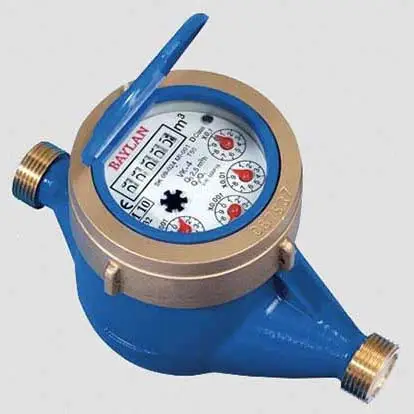
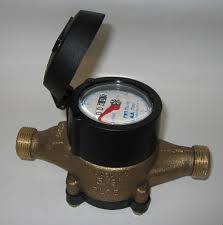
water meter
water meter is a device installed on your property's water line (usually made of bronze, brass, or plastic) that measures the volume of water consumed in gallons or cubic feet. It works like a car odometer, recording total usage for billing, and can detect leaks. Common types include mechanical (positive displacement), magnetic, or electronic (ultrasonic) devices.
Key Information About Water Meters
- How They Work:
- Positive Displacement: Typically used for residential, these use a rotary piston or nutating disk to measure low-volume flow.
- Velocity Meters: Use impellers or turbines (multijet meters) to measure flow speed.
- Smart Meters: Use ultrasonic technology or magnetic fields for high precision, no moving parts, and remote, real-time data transmission.
- Reading the Meter:
- Meters often have a register with black numbers (cubic meters or large units) and red numbers/dials (litres or smaller units).
- For standard billing, only the black numbers are typically read.
- They are often read via radio frequency (RF) by utility staff driving by.
- Purpose:
- Billing Accuracy: Measures exact usage rather than relying on estimates.
- Leak Detection: If the dial moves when no water is being used, a leak likely exists.
- Location: Usually installed on an inside surface where the water main enters the house, or in a pit near the property line.