Geotextile
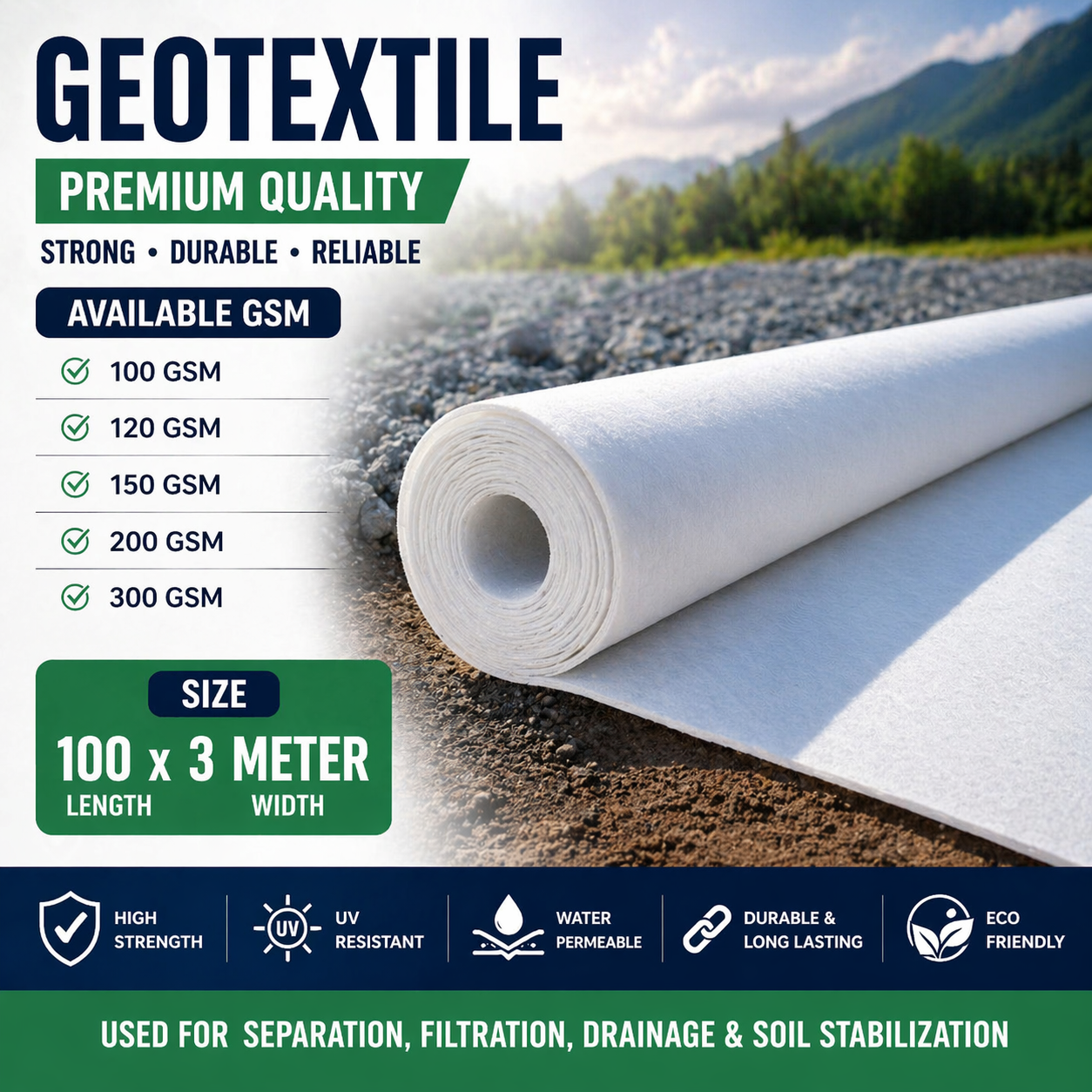
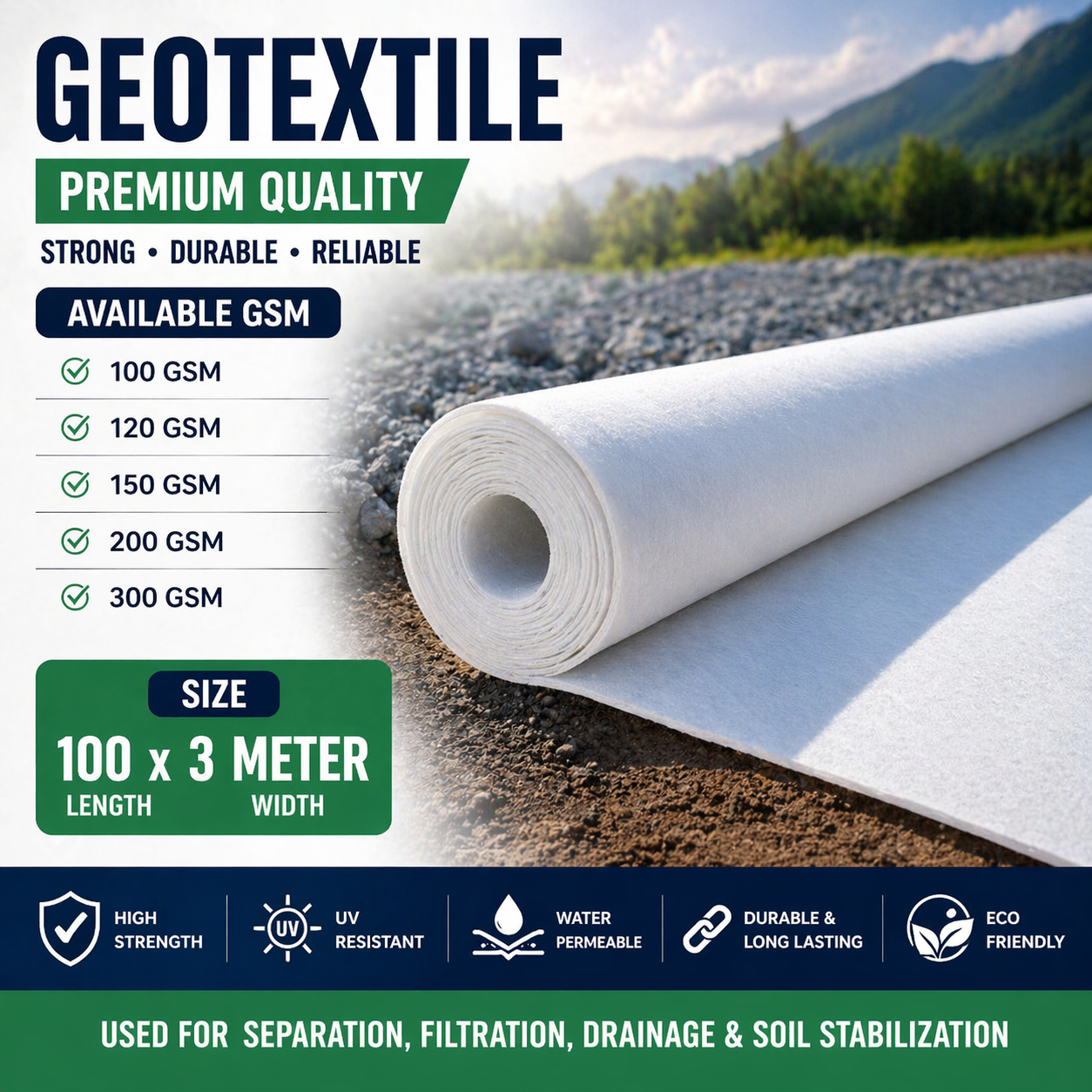
Geotextiles are permeable, synthetic fabrics—usually polypropylene or polyester—used in civil engineering to stabilize, separate, filter, and drain soil. They enhance construction durability by preventing soil mixing, reinforcing roads/slopes, and controlling erosion, acting as a flexible, durable barrier in construction projects.
Key Types of Geotextiles:-
Woven: High-strength fabrics used for separation and reinforcement in road construction and embankments.
Non-woven: Felt-like materials used for filtration, drainage, and erosion control, allowing water to pass while retaining soil. Key Functions and Applications:-
Separation: Prevents different materials (like gravel and soft subgrade) from mixing.
Stabilization: Increases load-bearing capacity for roads, railways, and foundations.
Filtration/Drainage: Enables water movement while keeping soil particles in place, ideal for retaining walls and French drains.
Erosion Control: Protects slopes and banks from water-driven movement.
Benefits of Geotextile Use:-
Cost Savings: Extends the life of paved/unpaved roads and reduces maintenance.
Durability: Made from durable, high-strength materials that withstand harsh conditions.
Improved Structural Performance: Enhances soil stability in challenging, weak, or marshy conditions.