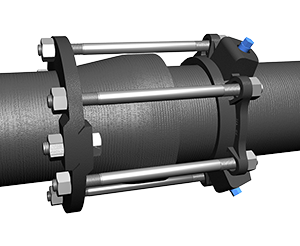
DI Restrained Joint pipe
Ductile iron (DI) restrained joint pipe is a specialized piping system featuring integrated mechanical mechanisms designed to prevent joint separation under high internal pressure or external loads. Unlike standard "push-on" joints that rely solely on friction and can pull apart, restrained joints provide a positive axial lock, often eliminating the need for massive concrete thrust blocks.
Common Types of Restrained Joints
There are several proprietary and standardized designs used to achieve restraint:
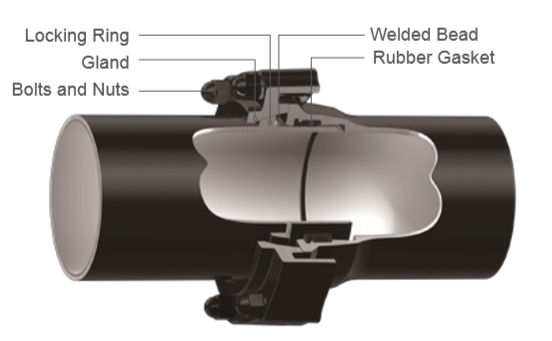
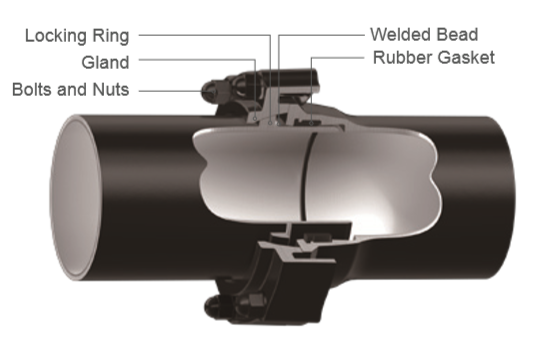
- Integrally Cast Push-On Joints: These feature a factory-adapted spigot with a welded bead and a special bell casting that uses locking segments or rings to provide a permanent axial lock.
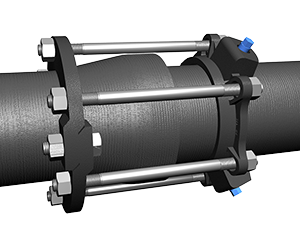
- Mechanical Joint (MJ) with Restraint Glands: This "classic" system uses a standard mechanical joint socket but replaces the standard gland with a wedge-action retainer gland These glands use internal wedges that grip the pipe wall when bolts are tightened.
- Restraining Gaskets: These are specialized gaskets containing high-strength stainless steel teeth that "bite" into the pipe's spigot to prevent pullout. A common example is the U.S. Pipe FIELD LOK 350®.
- Ball and Socket Joints: Specifically designed for extreme flexibility in subaqueous (underwater) crossings, these allow for up to 15 degrees of deflection per joint while maintaining a full axial lock.
Key Benefits
- Elimination of Thrust Blocks: Because the joints themselves resist axial forces, they are ideal for tight urban spaces where there is no room for concrete anchors.
- High Pressure Resistance: Many restrained joint systems are rated for 350 psi or higher, making them suitable for critical infrastructure like water mains and fire protection lines.
- Trenchless Capability: Due to their high pull-out resistance, these pipes are frequently used for Horizontal Directional Drilling (HDD) and pipe bursting.
- Seismic Resilience: Certain designs, such as Earthquake-Resistant Ductile Iron Pipe (ERDIP), allow for significant expansion and contraction to withstand ground shifts during earthquakes.
Primary Applications
- Vertical and Horizontal Bends: Where water flow changes direction and creates significant thrust forces.
- Bridge and Aerial Spans: Locations where the pipe is not buried and cannot rely on soil friction for stability.
- Soft or Unstable Soil: Areas prone to liquefaction or settlement where standard joints might disconnect.
- Subaqueous Crossings: For pipelines running under rivers, lakes, or harbors.