DI PIPE
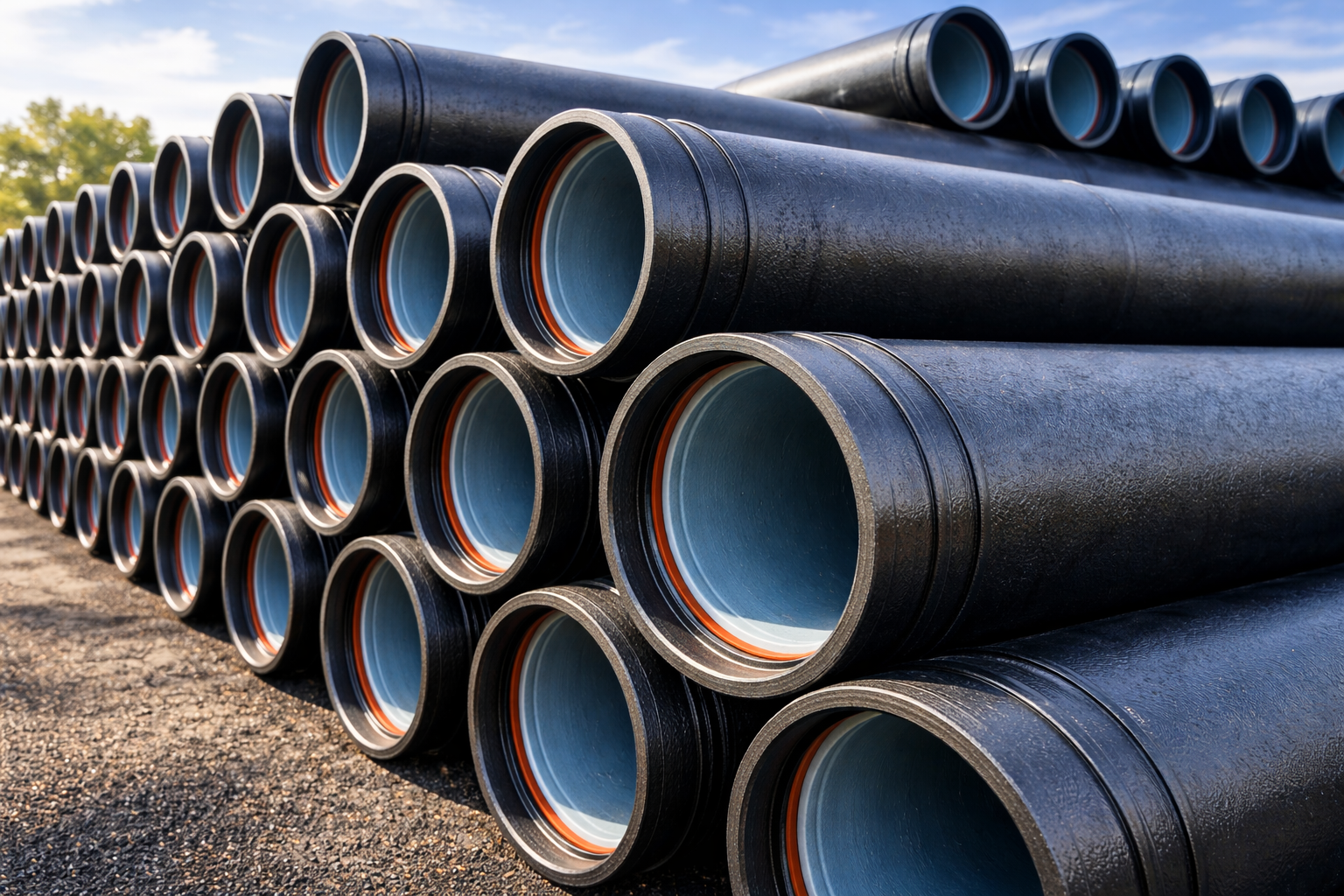
Ductile Iron (DI) pipes are high-strength, durable, and flexible pipes used for water, sewage, and industrial applications. Made by treating molten iron with magnesium to form nodular graphite, they offer superior impact resistance and ductility compared to traditional cast iron. They are ideal for high-pressure, deep trench, and shifting soil conditions.
Key Features and Benefits
- High Strength & Durability: Designed to withstand high internal pressure, water hammer, and heavy external loads, making them suitable for long-term service.
- Ductility: Unlike brittle cast iron, DI pipes can bend under load without breaking, providing enhanced structural integrity.
- Corrosion Resistance: Typically protected with internal cement mortar linings and external coatings (bitumen, zinc, epoxy) to prevent corrosion from aggressive soils.
- Joint Flexibility: Utilizes push-on, mechanical, or restrained joints (e.g., Tyton®, TR Flex®) that allow for easy installation and angular deflection.
- Longevity: Known for long service life, frequently used in potable water and wastewater infrastructure.
Common Applications
- Potable Water Transmission: Trusted for drinking water networks due to strength and purity.
- Sewage Systems: Resists chemical attack in sanitary sewer applications.
- Industrial Applications: Transports industrial water, slurries, and process chemicals.
Common DI Pipe Classes
DI pipes are generally classified by wall thickness and pressure rating, with popular classes including K7, K8, K9, and C25, C30, C40
DI pipes are generally classified by wall thickness and pressure rating, with popular classes including K7, K8, K9, and C25, C30, C40
Manufacturing Process
DI pipes are manufactured using centrifugal casting machines, where molten iron is poured into a spinning mold, creating a dense, high-quality pipe.
DI pipes are manufactured using centrifugal casting machines, where molten iron is poured into a spinning mold, creating a dense, high-quality pipe.